
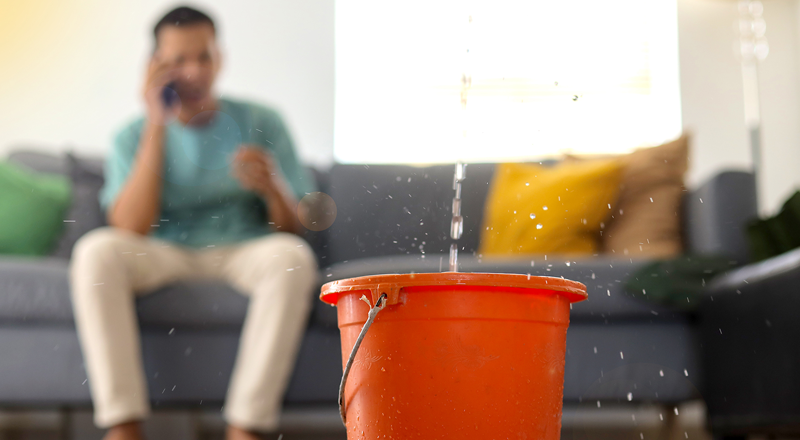
Your roof is designed to protect your home from rain, wind and changing weather conditions, but even a well-built roof can develop problems over time. The earlier those problems are identified, the better the chance of dealing with them before they develop into more extensive damage.
Some roofing problems are obvious, while others begin with relatively small warning signs. Knowing what to look for can help you decide when it is worth arranging a professional inspection.
Missing, Slipped or Broken Roof Tiles
One of the easiest signs of roof damage to recognise is a missing, cracked or slipped tile.
Roof tiles are positioned to work together as a weather-resistant covering. If one becomes damaged or moves out of position, the area underneath may become more vulnerable to rain.
You may be able to spot a problem from ground level, particularly after strong winds or a storm. You might also notice pieces of tile around the property.
A small number of damaged tiles does not necessarily mean that an entire roof needs replacing. In many cases, appropriate roof repairs may be enough to restore the affected area.
Damp Marks on Ceilings or Walls
Water staining inside the property is another important warning sign.
A brown or discoloured patch on a ceiling, around a chimney breast or at the top of an external wall can indicate that moisture is entering somewhere above.
However, the position of an internal stain does not always identify the exact point where the roof is leaking. Water can travel along roof timbers or other surfaces before appearing inside the property.
This is one reason why identifying the actual cause of a leak is important before deciding what work is required.
Problems Around Chimneys and Roof Junctions
Areas where different parts of a roof meet are particularly important for keeping water out.
Lead flashing is commonly used around chimneys and other roof junctions to create a weather-resistant seal. If it becomes loose, damaged or deteriorated, water may be able to enter the roof.
Professional leadwork can include inspection, repair and replacement of flashing and other lead details where necessary.
Loose or Damaged Ridge Tiles
Ridge tiles sit along the highest point of many pitched roofs and are particularly exposed to the weather.
Older ridge tiles may have been secured using mortar. Over time, this can deteriorate or crack, potentially allowing sections to become loose.
Modern dry-fix systems can also be used where appropriate, but the right solution will depend on the roof and the condition of the existing installation.
If ridge tiles appear uneven, loose or damaged, it is sensible to have them checked rather than waiting for the problem to become more serious.
Signs of Trouble With a Flat Roof
Flat roofs have their own potential warning signs.
Depending on the roofing system, these can include:
- visible cracks or splits
- blistering
- damaged edges
- areas of deterioration
- persistent water ingress
- noticeable changes to the roof surface
Garages, extensions and other flat-roofed areas are particularly worth keeping an eye on.
5 Star Roofing & Building provides felt and fibreglass roofing for new installations as well as repairs to existing flat roofs.
Overflowing or Damaged Guttering
Not every apparent roof leak starts with the roof covering itself.
Gutters have the important job of collecting rainwater and directing it safely away from the building. If they become blocked, damaged, misaligned or detached, water can overflow onto walls, fascias and other areas of the property.
Signs to look for include water spilling over the gutter during rainfall, visible sagging, leaking joints and staining on the walls beneath.
Professional guttering services can help resolve problems with damaged or ineffective rainwater systems.
Changes to Your Roofline
Fascias, soffits and other roofline components also play an important part in protecting and finishing a property.
Rotting timber, loose sections or obvious deterioration should not be ignored. Problems around the roofline can sometimes develop alongside guttering or roofing issues.
If several different parts of the roof appear to be deteriorating at the same time, a broader inspection may be more useful than looking at one component in isolation.
Problems After Strong Winds or Heavy Rain
Cornwall properties can experience periods of strong wind and heavy rainfall, and exposed roofs may be particularly vulnerable.
After unusually severe weather, it can be worth visually checking your roof from a safe position.
Look for changes such as missing tiles, loose materials, damaged guttering or debris around the property.
Never put yourself at risk by climbing onto a roof to investigate.
Don’t Ignore Small Changes
One of the most useful things a homeowner can do is become familiar with how their roof normally looks.
If something changes, there is usually a reason for it.
A single slipped tile or small area of damaged flashing may be relatively straightforward to address. If water is allowed to enter repeatedly, however, the consequences can spread beyond the original fault.
The aim should therefore be to identify the cause and carry out the work that is genuinely required, rather than allowing a small roofing issue to develop.
Roofing Help Across Cornwall
5 Star Roofing & Building provides roofing services throughout Cornwall, including Truro, Falmouth, Newquay, St Austell, Penzance, Camborne and Redruth.
You can view the company’s wider areas we cover or explore the complete range of roofing services.
If you have noticed signs of damage or are unsure about the condition of your roof, call 0800 699 0309 to discuss the problem and arrange a free, no-obligation quotation.


[…] Related reading: How to spot the early signs of roof damage […]